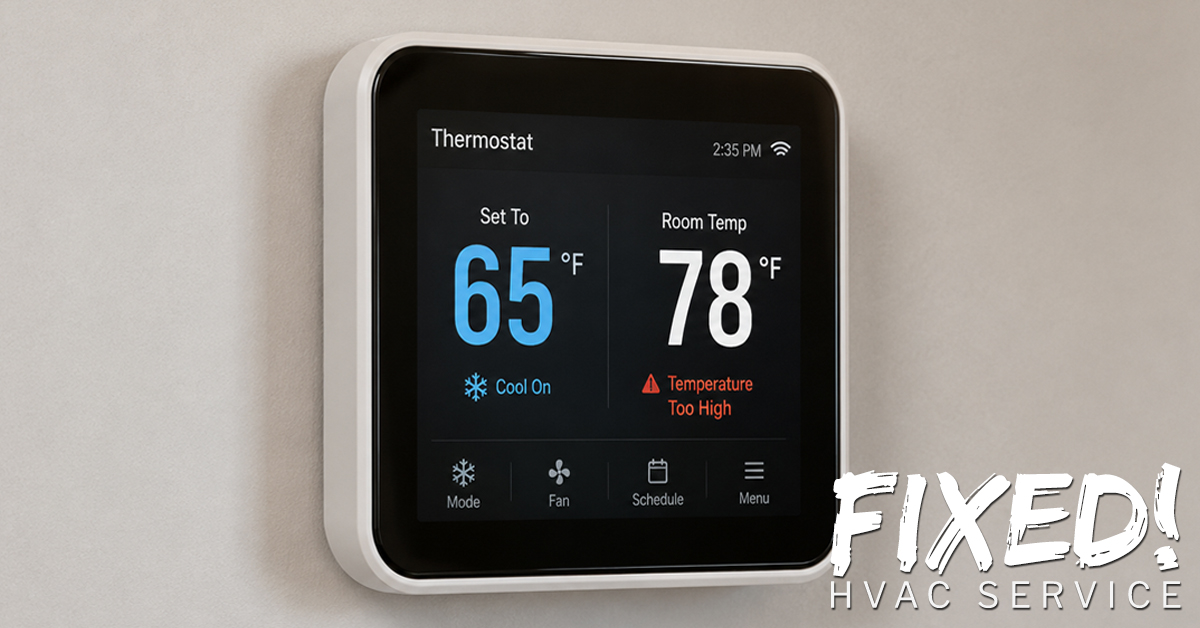
The best thermostat setting advice matters when Maryland temperatures reach 95 to 100 degrees. During a heat wave, your air conditioner works harder than usual. Naturally, you want comfort without overworking your system. However, the wrong thermostat habits can make your home feel worse.
In Annapolis, many homes already struggle with uneven temperatures. Older ductwork, attic heat gain, poor insulation, and airflow issues can all affect comfort. Therefore, setting your thermostat correctly becomes even more important during extreme heat.
At FIXED! HVAC, we help homeowners stay comfortable through Maryland’s toughest summer weather. Since 2013, our family-owned team has delivered accurate, honest, value driven HVAC service.
Start With a Realistic Temperature
During extreme heat, aim for a thermostat setting around 75 to 78 degrees. This range balances comfort, efficiency, and equipment protection. If your home feels comfortable at 78, that setting can save energy.
However, every household feels temperature differently. Some families prefer 75 during the day. Others can tolerate 79 with ceiling fans running.
The Best thermostat setting is the one your system can maintain safely. If your AC cannot reach the setting, lowering it further will not help.
Why Setting It to 65 Will Not Cool Faster
Many homeowners set the thermostat to 65 during a heat wave. Unfortunately, that does not cool the house faster. Your AC cools at the same speed, regardless of the number selected.
Instead, the system runs longer. As a result, energy bills rise, and equipment stress increases. The home may still never reach that low setting.
Think of your thermostat like a light switch, not a gas pedal. It tells the system when to start and stop. It does not control cooling speed.
How to Avoid Overworking Your AC
Your air conditioner needs help during extreme heat. First, choose a reasonable thermostat setting. Next, avoid large temperature swings throughout the day.
Frequent adjustments force your system to chase moving targets. As a result, the AC may run longer than necessary. A steady setting keeps operation more consistent.
Additionally, replace your air filter regularly. Dirty filters restrict airflow and make your system work harder. Clean filters support better cooling and lower energy use.
Auto Versus On Fan Setting
Your thermostat fan setting also matters. Auto runs the fan only during active cooling cycles. This setting usually saves energy and improves humidity control.
On runs the fan continuously. It can help circulate air and reduce temperature differences between floors. However, it may raise electric use.
During humid Maryland weather, Auto often works best. It allows moisture to drain from the evaporator coil. If the fan runs constantly, it may push moisture back indoors.
Still, some homes benefit from periodic circulation. Smart thermostats may offer a circulate option. This gives airflow benefits without nonstop fan operation.
Use Smart Thermostat Scheduling
Smart thermostats can help during heat waves. They allow you to schedule temperatures around your daily routine. This prevents unnecessary cooling when nobody is home.
However, avoid setting the temperature too high while away. If the house gets too warm, recovery can take hours. During extreme heat, a small setback works better.
For example, use 78 while home and 80 while away. Then schedule cooling before you return. This approach reduces stress and keeps comfort manageable.
The Best thermostat setting should support your schedule, not fight it.
Close Blinds During Peak Sun
Sunlight adds a surprising amount of heat. South and west facing windows create the biggest afternoon problems. Therefore, closing blinds can quickly reduce indoor heat gain.
Use curtains, shades, or blinds during peak sun hours. This simple step helps your AC maintain the thermostat setting. It also improves comfort in upstairs bedrooms.
In older Annapolis homes, window heat gain can be significant. Reducing sunlight often makes a noticeable difference.
Use Ceiling Fans Correctly
Ceiling fans do not lower room temperature. Instead, they make people feel cooler by moving air across skin. That breeze allows many homeowners to raise the thermostat slightly.
During summer, ceiling fans should spin counterclockwise. This direction pushes air downward and creates a cooling effect. Remember to turn fans off when rooms are empty.
Fans cool people, not rooms. Using them wisely saves energy without sacrificing comfort.
Keep Interior Doors Open
Closed doors can create airflow problems. When supply air enters a closed bedroom, it needs a path back. Without return airflow, pressure builds inside the room.
That pressure can reduce circulation and create uneven temperatures. Upstairs bedrooms often suffer from this issue at night. Keeping doors open helps air move more freely.
If privacy matters, transfer grilles or return pathways may help. FIXED! HVAC can evaluate airflow and recommend practical options.
Understand Hot Upstairs Problems
Maryland homes often feel hot upstairs during summer. Warm air rises naturally, which creates temperature differences between floors. Attic heat also radiates into upper rooms.
Older ductwork can make the problem worse. Leaky ducts may lose cool air before it reaches bedrooms. Poor insulation adds even more heat gain.
In some homes, thermostat settings cannot solve this alone. Zoning, mini-splits, or duct improvements may be needed.
When Rising Indoor Temperatures Are Normal
During 100 degree weather, your AC may run almost constantly. That can be normal if indoor temperatures remain close to your setting. For example, maintaining 76 or 78 may still be reasonable.
Peak afternoon heat can temporarily challenge any system. Once the sun goes down, the home should begin recovering. If temperatures stabilize, your system may be doing its job.
Even so, long run times deserve attention if comfort keeps declining.
When Rising Temperatures Signal a Problem
Call FIXED! HVAC if indoor temperatures keep climbing. Warm air from vents also suggests a problem. Ice on refrigerant lines or coils requires professional service.
Other warning signs include tripped breakers, water leaks, or unusual noises. Weak airflow may point to dirty filters, blower issues, or duct restrictions. Low refrigerant can also reduce cooling performance.
A professional diagnosis helps prevent bigger repairs. Early service can protect your compressor and restore comfort faster.
Why Maintenance Matters During Heat Waves
Maintenance helps your AC survive extreme weather. Technicians clean condenser coils, test capacitors, and inspect contactors. They also check refrigerant levels, drain lines, thermostats, and airflow.
These details matter during a Maryland heat wave. Small weaknesses become bigger problems when the system runs all day. Preventive service lowers the risk of breakdowns and improves efficiency.
A spring or early summer tune-up is always smarter than an emergency call.
Why Choose FIXED! HVAC?
FIXED! HVAC is rooted in Annapolis, Maryland. Since 2013, we have earned a reputation for fair pricing and quality work. Our mission is to provide accurate, honest, value driven HVAC services.
As a local family-owned company, we avoid large regional overhead. That helps us focus on practical solutions and clear communication. Our team also continues education on evolving HVAC technology.
Reviews on Google, Yelp, Facebook, Angie’s List, and other sites reflect that commitment.
Stay Comfortable During Maryland Heat
The Best thermostat setting during extreme heat is realistic, steady, and supported by good airflow. For many homes, that means 75 to 78 degrees. Add ceiling fans, closed blinds, clean filters, and open doors for better results.
If your home still feels uncomfortable, FIXED! HVAC can help. We handle AC repair, heat pump service, thermostat upgrades, mini-splits, filters, humidifiers, air purification, maintenance tune ups, and replacement guidance. Contact FIXED! HVAC today for honest answers and reliable comfort in Annapolis.